In short
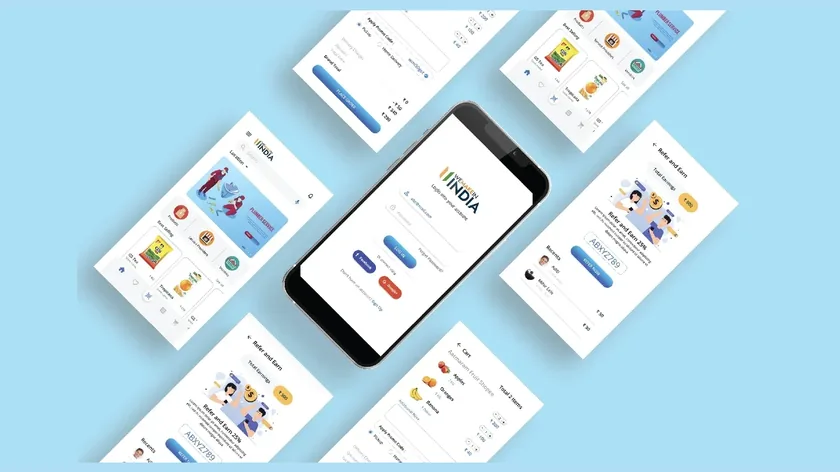
Liftup Technologies builds iOS and Android apps for UK businesses, working remotely from Pune, India. We use React Native or Flutter for one codebase on both platforms, connect your backend or build one, and handle App Store and Google Play submission. UK points covered include UK GDPR, PECR consent for marketing notifications, accessibility and VAT-aware payments. You get a fixed quote within one working day of a short call.
On this page 8 sections
Do you need an app at all?
Many UK businesses ask for an app when a fast mobile website would do. An app earns its cost when customers return often, when you need device features such as the camera, location or push notifications, or when offline use matters. Booking systems, loyalty schemes, field-service tools and member areas are typical fits. A one-off brochure or a rarely used calculator is usually better as a web page.
We ask three questions on the first call: how often will a user open it, what must it do that a website cannot, and who will update it after launch. If the honest answer is a progressive web app, we say so. The PWA vs native app comparison explains the trade-offs.
iOS first or both platforms?
iPhone share among UK users is high compared with many other countries, so an iOS-first launch is common. Your own analytics, or your customer survey, should decide, not our opinion. React Native and Flutter let us ship both platforms from one codebase, so the extra cost of Android is smaller than a second native build.
| Approach | Best for | Trade-off |
|---|---|---|
| React Native | Teams with JavaScript skills, apps sharing logic with a web product | Some native features need custom modules |
| Flutter | Highly custom interfaces and consistent look on both platforms | Dart is less common among web developers |
| Native Swift or Kotlin | Heavy hardware use, such as advanced camera or Bluetooth work | Two codebases to build and maintain |
| Progressive web app | Simple tools and content, no store needed | Fewer device features on iPhone |
Read the full mobile app development service scope for design, API and testing.
Local details for the UK
- Store listings, screenshots and in-app text in English; app store search is per country, so the listing needs local keywords. Source: CIA Factbook
- Analytics and ad tags on the Mobile app development wait for consent, as Information Commissioner's Office (ICO) expects under UK GDPR. Source: ICO
- UK GDPR and the Data Protection Act 2018 covers the personal data the Mobile app development stores, with Information Commissioner's Office (ICO) as regulator, so access logs, retention and deletion are planned from the start. Source: ICO
- App Store privacy labels and the Google Play data safety form must match what the app collects from users in the UK.
UK rules that shape an app
- UK GDPR and the Data Protection Act 2018. Apps collect device identifiers, location and account data. You need a privacy notice, a lawful basis and sensible retention. Apple and Google both require privacy declarations in their store listings.
- PECR. Marketing messages by email or text need consent, and your adviser should confirm how that applies to push notifications that carry marketing. Service messages, such as an order update, are treated differently.
- Children. If young people may use your app, the ICO's Children's Code applies to online services likely to be accessed by children. Decide early who your audience is.
- Accessibility. The Equality Act 2010 applies to services, including apps. We build with dynamic text sizes, screen reader labels and sufficient contrast.
- Payments. Digital goods sold inside an app usually go through the store's payment system, and physical goods and services can use providers such as Stripe. Store rules change, so we check the current guidelines.
We turn each of these into build tasks and tell you what your adviser must confirm.
Want mobile app development in the UK?Send a few details and get a fixed quote within one working day.
Get my fixed quoteProject phases
- Scope and prototypeUser flows and a clickable prototype you can test with real customers before any code.
- DesignScreens for iPhone and Android, following each platform's design guidelines.
- BuildApp and backend in two-week blocks, each ending with a build you install through TestFlight or an internal Google Play track.
- Store submissionListings, screenshots, privacy answers and review notes, prepared with your developer accounts.
- Launch and learnCrash monitoring, analytics with consent, and a first update within weeks of release.
Review times at Apple and Google vary, so we leave room in the plan. Do not set a public launch date before approval.
Working across time zones
For mobile app development, design and build reviews fit 09:00 to 12:30 in London in January.
London 09:00 to 18:00 Pune 09:00 to 18:00 overlap
Working across UK and India time
The UK is 5.5 hours behind India in winter and 4.5 hours behind in British Summer Time. A weekly demo at 10:00 UK time works for both sides. Between demos you use a shared board and a chat channel, and testers install builds on their own phones. Developer accounts, signing keys and cloud services are opened in your company's name, and we are added as team members.
Cost and ownership
Screens, integrations, user accounts, payments, admin panel and the need for offline use all move the price. Store accounts have their own fees, paid by you directly to Apple and Google. See the web app cost guide for comparable drivers and the UK web page for delivery details. You own the code, designs and accounts at handover.
Sources: Apple Developer: App Store Review Guidelines, Google Play Console Help, ICO: Children's code.
Updated 20 November 2026