Ecommerce · 1 Oct 2026 · 3 min read
Ecommerce vs Marketplace Selling: Should You Have Your Own Store in India?
By the Liftup team in Pune



350+businesses served
8countries
7+years















What Marketplaces Offer
Selling online in India usually means choosing between two paths: building your own ecommerce website, or listing on marketplaces like Amazon and Flipkart. Many sellers eventually do both, but understanding the trade-offs upfront helps you decide where to focus first.
Amazon and Flipkart bring existing traffic and buyer trust that a brand new website simply does not have. Customers already have saved payment methods and a familiar checkout, which can mean faster first sales for a new seller. The trade-off is that marketplaces charge commissions on every sale, control the customer relationship, and make it hard to build repeat buyers who know your brand directly.
Rather have it done for you? See our ecommerce development service, from $1,500.
On this page 8 sections
What Your Own Store Offers
A dedicated ecommerce website gives you full control over branding, pricing, and the customer experience. You own the customer data and relationship, which matters for email marketing, retargeting, and repeat purchases. The downside is that you have to generate your own traffic, which takes time and ongoing marketing investment rather than relying on built-in marketplace demand.
Free · no obligation
Get a free SEO and AI visibility check of your site
We look at how Google and AI tools like ChatGPT see your site and send you the top fixes, within one working day.
Request received
Thanks. Your free check is in the queue.
We will send the top fixes on WhatsApp or email within one working day.
A Common Approach: Use Both
Many Indian sellers do not choose one over the other. They use marketplaces to generate volume and discoverability while building their own store in parallel to reduce long-term dependence on marketplace fees and to build a direct relationship with repeat customers. Products that do well on marketplaces are not always the ones best suited to a standalone store, so this often takes some experimentation.
Questions to Ask Before Choosing
Consider how price-sensitive your product category is, since marketplaces often create pressure to compete on price. Consider whether your product benefits from storytelling and brand building, which marketplaces limit compared to a dedicated website. And consider your own capacity to drive traffic, since a standalone store without a marketing plan behind it will struggle to get found.
Questions to Ask Before You Decide
Think about what matters most to you right now. Do you need your first sales quickly, or do you want to build a brand people remember? Can you handle packing, returns and customer questions yourself? How much of your price can you afford to give up in fees and commissions? Do you want to own your customers’ contact details so you can reach them again? If speed to first sale matters most, a marketplace is the easier start. If brand and repeat customers matter most, your own store gives you more control.
Costs and Work Many Sellers Forget
Marketplaces charge fees, and rules about returns, listings and ads can change, so check the current terms before you plan your margins. Your own store has its own costs, such as a domain, hosting, a payment gateway, design, and the time to bring visitors to the site. Neither path is free of effort. Whichever you pick, list every cost you can think of, including shipping, packaging, returns and tax, and work out what is left per order.
A Practical Way to Begin
You do not have to commit to one path forever. A common way to start is to list a small number of products on a marketplace to learn what sells, while setting up a simple store of your own for your best items. Keep your product photos, descriptions and prices organised in one place so you can use them on both. As orders come in, note which customers come back and which channel they came from, and use that to decide where to put more effort.
The Bottom Line
There is no universally right answer between the two. Marketplaces offer a faster path to initial sales, while your own store offers long-term brand ownership and better margins once you have traffic. Most growing Indian ecommerce businesses end up using a mix of both rather than picking just one. If you decide to build your own store, see our ecommerce website development service.
Work we have shipped
All our work

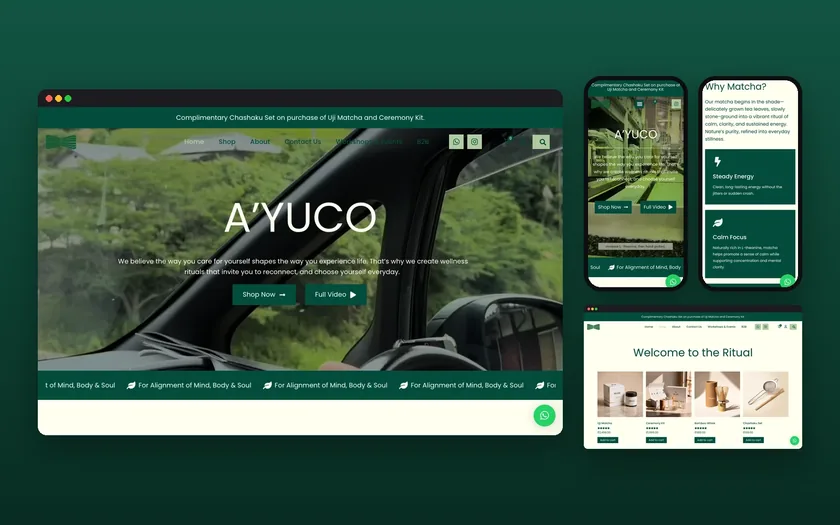
See your new homepage before you commit.
A free, private homepage concept built from your own words and photos within 48 hours.