Template or custom
Custom website vs template: which is right for your business?
A template is a finished design you adapt. A custom website is designed and built around your business. The right choice depends on how much your site has to do and how long you will keep it.
4 min read · By the Liftup team in Pune



How much would this cost us?
A fixed quote within one working day.
350+businesses served
8countries
7+years















In short
A template website suits you when you need to launch fast and a standard layout fits your offer. A custom website suits you when your products, brand, workflows or search plans do not fit a theme. Compare the cost over three years, not the launch price. Liftup builds both, with projects from $1,500.
Rather have it done for you? See our website design service, from $1,500.
On this page 6 sections
What the two options really are
A template, or theme, is a pre-built design and a set of layouts for a platform such as WordPress, Shopify or Webflow. You add your logo, colors and content. A custom website starts from your goals: someone studies your customers and pages, designs the layouts, and builds only what the site needs.
There is a middle path that many businesses should take: a well-built template, customized by a developer. The theme provides the foundation. The agency changes layouts, speeds it up, adds the missing pieces and sets up tracking. For many small businesses this is the sensible choice, and we say so when it applies.
Side-by-side comparison
| Factor | Template | Custom website |
|---|---|---|
| Time to launch | Days to a few weeks | Several weeks to months, depending on scope |
| Up-front cost | Low | Higher |
| Design fit | Close, but shared with other sites | Built around your brand and customers |
| Page speed | Varies; many themes load unused code | Can be lean, because only needed code ships |
| Unique features | Plugins and workarounds | Built to spec |
| Search structure | Limited by the theme's templates | Page types and URLs planned from keyword research |
| Changing it later | Easy for content, harder for structure | Easy if documented; depends on build quality |
| Risk | Plugin conflicts, theme abandonment | Quality depends on the team you hire |
| Ownership | You own your content; the theme is licensed | You own the code by contract |
Free · no obligation
Get a free SEO and AI visibility check of your site
We look at how Google and AI tools like ChatGPT see your site and send you the top fixes, within one working day.
Request received
Thanks. Your free check is in the queue.
We will send the top fixes on WhatsApp or email within one working day.
A three-year cost formula
Launch price misleads. Use this formula for each option:
Three-year cost = build + (yearly changes x 3) + (hosting, licenses and plugins x 3) + (cost of lost sales from a slow or confusing site)
Take a business that needs eight edits a year to layout or features. Suppose a template build costs 1 unit, and each structural edit on a theme costs 0.1 unit because developers work around the theme. Suppose a custom build costs 3 units, and each edit costs 0.05 unit because the code was written for this site. Over three years the template totals 1 + (8 x 0.1 x 3) = 3.4 units. The custom build totals 3 + (8 x 0.05 x 3) = 4.2 units. The template is still cheaper, but the gap shrinks from 2 units to 0.8.
Now add lost sales. If the theme's checkout or page speed costs even a small share of conversions on a store that earns steadily, the gap can close. If the site is a five-page brochure, it will not. Run the numbers with your own figures, which is why we ask about your traffic and sales in the first call.
For a market reference, Clutch reports that web development projects typically cost under $10,000, with an average of $66,499 (market data, Clutch). That average is pulled up by large builds, so most small businesses sit well below it.
When a template wins
- You have a simple offer, five to fifteen pages and no special features.
- You are testing a business and expect to change direction within a year.
- You need to be live for a launch date and the content is ready.
- The platform theme already supports your model, such as a store with standard collections.
- You will manage the site yourself and want fewer moving parts.
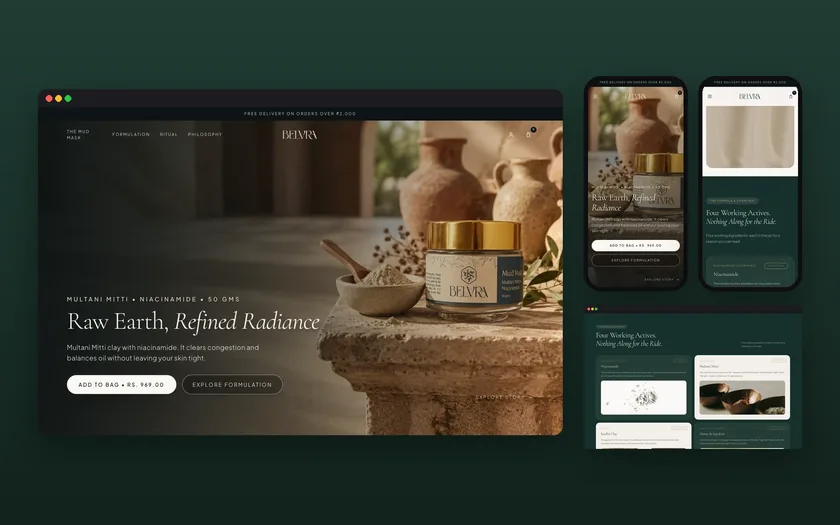
Our work on Belvra's Shopify store is an example of a focused store for a single product, where the job was clarity and a short path to buying rather than a complex catalogue.
When custom wins
- Your catalogue, pricing or lead flow does not fit a standard layout. Asian Packaging needed 67 products across styles, plies and flutes to stay easy to browse.
- You need integrations such as a CRM, booking or ERP. We built a custom CRM alongside the site for Aura Realty.
- Search is your main channel and you need page types and URLs designed from keyword research.
- Your brand depends on a distinct look that a shared theme cannot give.
- You plan to scale traffic, markets or languages and want lean code.
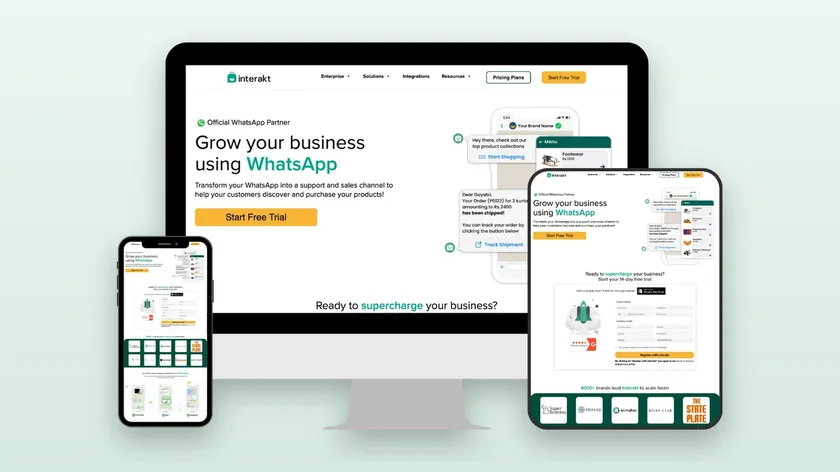
Fast delivery is not exclusive to templates either. For Interakt we built custom landing pages that went live in two weeks.
What it costs to switch
Starting on a template and moving to custom later is common. The cost is mostly migration: content, redirects and search history. If your URLs are clean and your content is well structured, the move is manageable. If the template locked content into page-builder shortcodes, you may have to rewrite it. Ask whoever sets up a template site to keep content in standard fields and not inside layout widgets.
To compare the two routes for your own project, request a proposal. You will get a fixed quote after a short call, with the template-based and custom options priced side by side when both make sense.
Sources: Clutch web developer pricing guide (market data).
Updated 20 November 2026
Questions, answered
Something else on your mind? Ask us directly or WhatsApp us. We reply within one working day.
Are templates bad for SEO?
Can a template look unique?
How much does a custom website cost?
How long does a custom website take compared with a template?
What should I prepare to choose between custom and template?
What does it cost to move from a template to custom later?
Keep exploring
Website design company for businesses that sell on trust
We decide what each page says and in what order before we choose a single color. Then we design, build and test the site on the platform that fits…
Pricing guideHow much does a website cost in 2026?
The honest answer is a range, and it depends on what the site has to do. This page shows the market data, five site types and a way to size your own…
ComparisonWebsite builder vs web designer: the real difference
A builder gives you tools. A designer gives you decisions, and the work of carrying them out.
Rather talk it through?
A free 30-minute call with a specialist. Straight answers, and a fixed quote if you want one.